

The Word Became Flesh
1 In the beginning was the Word, and the Word was with God, and the Word was God. 2 He was with God in the beginning. 3 Through him all things were made; without him nothing was made that has been made. John 1:1-3
14 The Word became flesh and made his dwelling (tabernacled) among us. We have seen his glory, the glory of the one and only Son, who came from the Father, full of grace and truth. John 1:14
Matthew 1:1-17 and Luke 3:23-38 record the genealogies of Jesus. One line charts through Mary and the other one through Joseph. There is debate among scholars on which is which.
Mary and Joseph were in the betrothal stage of their marriage when the angel Gabriel told Mary she would conceive of the Holy Spirit. In a Jewish wedding, betrothal is more serious than an engagement. The bride is already legally bound to the groom during betrothal and a divorce is required to break it off. During this time, the bride is under the leadership of her groom. Joseph was a righteous man, and not knowing the true reason for her pregnancy (because the marriage is not consummated until the wedding day), he decided to divorce her quietly. He could’ve had her stoned to death by law. In fact, had she not been betrothed she more than likely would’ve been stoned. God was wise to put them together and to have Mary conceive in the betrothal stage. He later told Joseph in a dream about the reality of Mary and that he should go ahead and continue with the betrothal until she gave birth. Then they could finish the wedding ceremony.
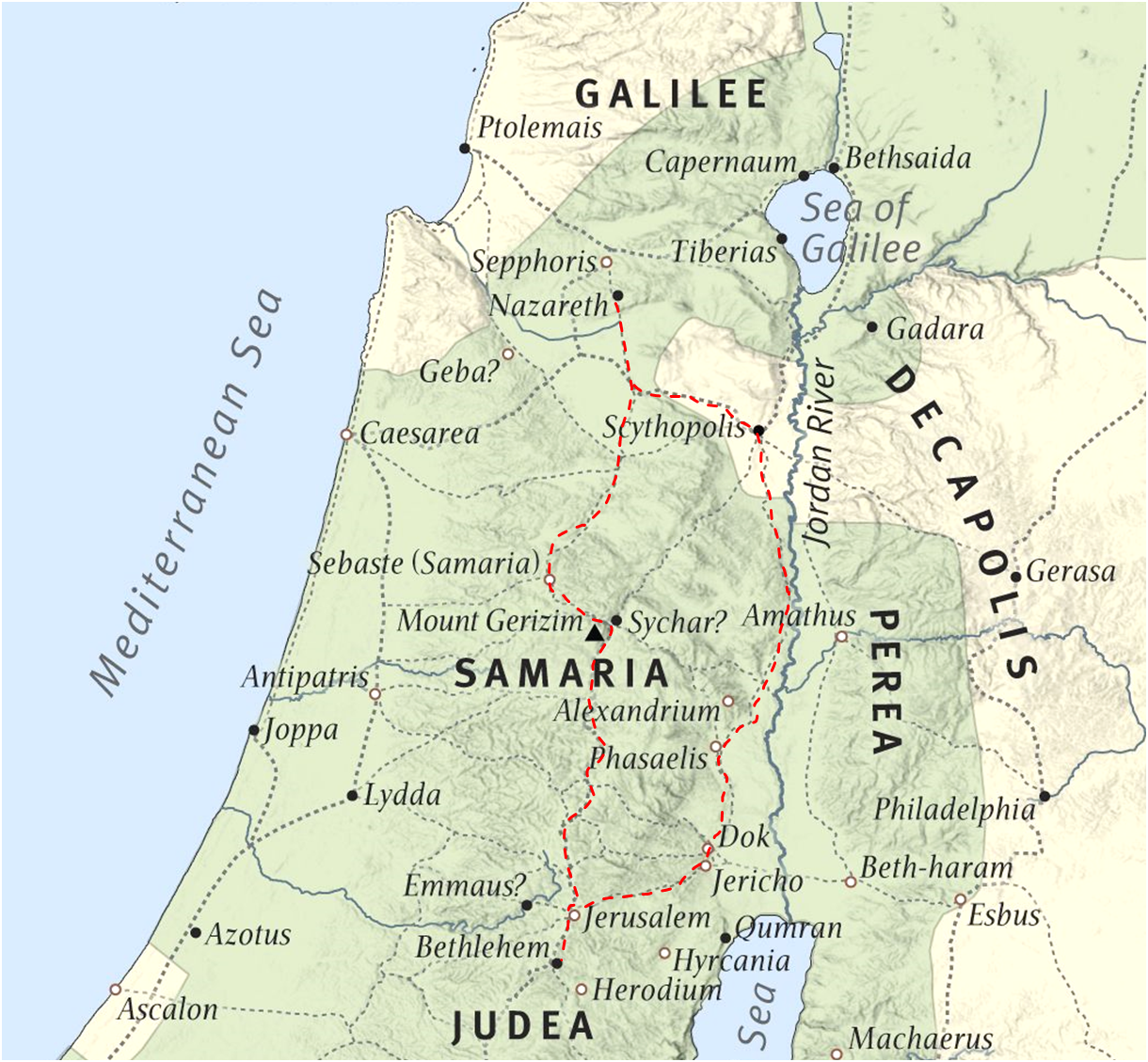
Mary and Joseph traveled from Nazareth to Bethlehem for a census and found the city was crowded when they got there. The time of year this happened was during the Feast of Tabernacles when Jerusalem, just 5 miles north of Bethlehem, would have been crowded by Jewish people from all around coming for the Pilgrimage Feast. There are two possible routes Mary and Joseph could have taken. The shorter direct route goes through Samaria. The Samaritans were considered enemies of the Jews. The other route would have taken them down by the Jordan River valley and then had them climb back up to Bethlehem at the end. Either way, the trip was around a week on foot.
There is debate on whether Jesus was born in a bottom section of a house where the animals were kept or born in a cave where the sacrificial lambs were kept. Either way, He was born where animals were kept and was placed in a manger.
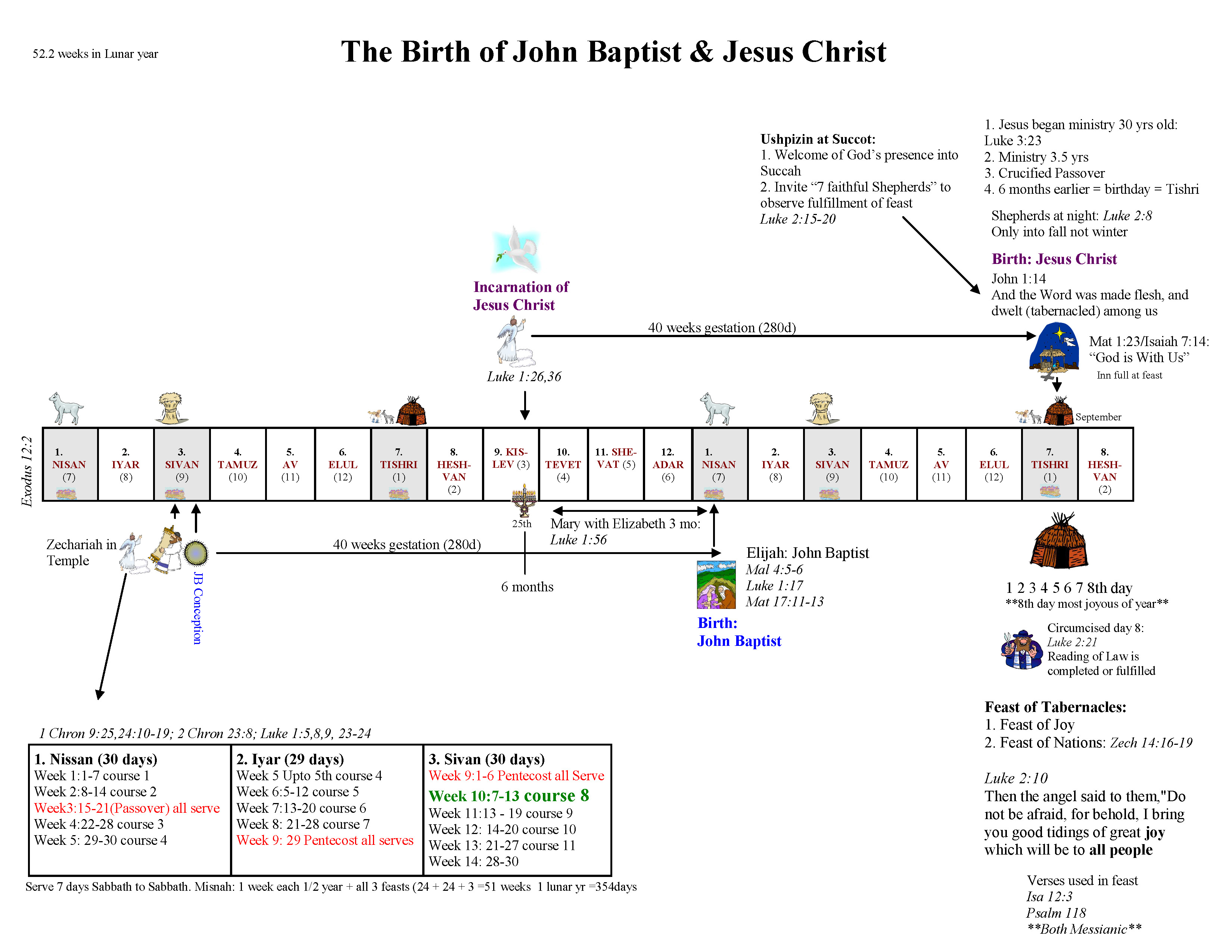
The first to hear about His birth were the shepherds keeping watch over the flocks at night. The Mishnah tells us that one of the regulations “expressly forbids the keeping of flocks throughout the land of Israel except in the wilderness — and the only flocks otherwise kept would be those for the Temple services” (Bava Kamma.7:7; 80a). This means that these shepherds were more than likely Temple Priests keeping watch over the lambs being raised for Passover each year in addition to other spotless lambs used for other sacrifices in the year. It was the priests’ job to make sure the lambs were without blemish and completely unharmed before being sacrificed.
Suddenly, an angel broke the silence of the night with good news of great joy! A savior has been born! The Messiah! The angel told them where to find the baby and that He would be wrapped in cloths and lying in a manger. Before the angel departed He was joined with a multitude of angels giving glory to God. You can imagine the scene. The shepherds ran in haste and found everything just so. Somehow they knew exactly where to go. Either the angels gave them more information than what is recorded or they knew exactly where the perfect lamb would be born. Then, 17 When they had seen this, they made known the word that had been spoken to them concerning this Child. 18 And all those who heard were amazed at the things the shepherds told them (Luke 2:17-18). I just want to know if the priests at the temple eventually got word about it. If so, what were their thoughts? This was way before the wise men came to proclaim the same thing.
We know Jesus was circumcised 8 days later and given His name, just as the angel had instructed Joseph months before. An interesting thought… if Jesus was born at the beginning of the Feast of Tabernacles, that would put his circumcision on Shemini Atzeret.
About 33 days after this, “When the time came for the purification rites required by the Law of Moses, Joseph and Mary took him to Jerusalem to present him to the Lord 23 (as it is written in the Law of the Lord, “Every firstborn male is to be consecrated to the Lord”), 24 and to offer a sacrifice in keeping with what is said in the Law of the Lord: “a pair of doves or two young pigeons.” It’s during this time that the old man Simeon and the old widow Anna get to see the Messiah. Luke 2:21-38
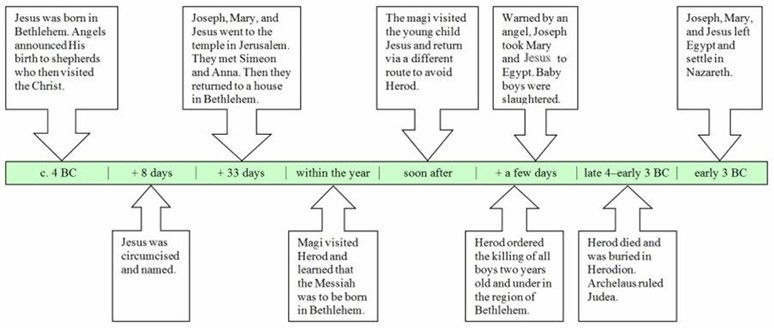
Sometime after this, months or at the most a couple of years later, the wise men came from the East bringing gifts of gold, frankincense and myrrh. These wise men were likely following the teachings of Daniel who was taken captive centuries before and became a wise man in Babylon and Persia (both in the East). Daniel 9:20-26 gives a detailed timeline of when Messiah would be born and these wise men would’ve had access to that knowledge. We don’t know how many wise men there were. Most scholars say at least twelve. Tradition gives us three because of the number of gifts that are mentioned. After they leave, they get a warning from God in a dream to not return to Herod. Joseph gets a warning from God too, but to take the family and flee to Egypt to escape Herod. After Herod dies, the family leaves Egypt and travels back to Nazareth where Jesus will spend most of his time growing up before being baptized into the ministry of being a Rabbi. Matthew 2
Here is a great visual timeline from our friends at Answers In Genesis:
Jesus at 12
We know that Jesus traveled with His family to Jerusalem at least three times a year for the appointed feasts. We get a glimpse into the Passover visit during His twelfth year. This is the time Jesus was left behind on accident and was found three days later in “My father’s house”. The route is the same as mention above. Just think, Mary and Joseph had probably at least made it close to the Jordan River Valley( about 700 ft below sea level) when they realized Jesus was not with the group. It was quite the uphill trek back to Jerusalem (about 2500 ft above sea level). Can you imagine how worn out they were? Luke 2:41-52
Baptism at 30
We next see Jesus getting baptized at age thirty by His cousin John in the Jordan River. All four Gospels record something about this event. Matthew 3, Mark 1:1-13, Luke 3:1-22, John 1:15-34
In the first century world there were 4 primary reasons why someone would be baptized or immersed in a mikvah:
- Ritual Purification – this was for anyone who was considered “unclean”. Women would go to a mikvah or be baptized in a river after their cycle or childbirth. Everyone who had been through a sickness went through this process after healing.
- Doctrinal Affiliation – think of John the Baptist baptizing for forgiveness of sins. Some people were baptized after a confession of faith.
- Choosing a Rabbi – once you chose a Rabbi to follow you would be baptized into the name of that Rabbi. This indicated you took on that Rabbi’s yoke or teaching and showed you were under his authority.
- Ordination into Ministry – Men could become rabbis at the age of 30. They would begin their ministry with a mikvah or baptism. Jesus did exactly this with John the Baptist.
After Jesus’ baptism we see Him in the wilderness fasting for forty days. At the end when He was hungry, Satan came to test Him. Matthew 4:1-11, Check out this video:
Extra Charts & Resources:
Articles:
The Bible Project Blog: How Does the Bible’s Story Lead to Jesus?
The Bible Project Blog: Jesus and the Genealogies
David Schrock: Baptism in the Jordan River – 10 Things about Joshua 3-4
Teaching Videos:
The Bible Project Video: Gospel of the Kingdom
The Forgotten Jesus podcast: The Forgotten Years of Jesus’ Childhood
The Forgotten Jesus podcast: The First Recorded Words of Jesus
Cornerstone Chapel teaching video: Luke 1 God Remembers His Oath
Cornerstone Chapel teaching video: Luke 2
Cornerstone Chapel teaching video: Luke 3
Cornerstone Chapel teaching video: Matthew 2-3 Baptism of Water, Holy Spirit, and Fire
Cornerstone Chapel teaching video: Matthew 4 When Temptation Comes
Cornerstone Chapel teaching video: Galatians 4 The Monumental Moment
 Theresa Haigler